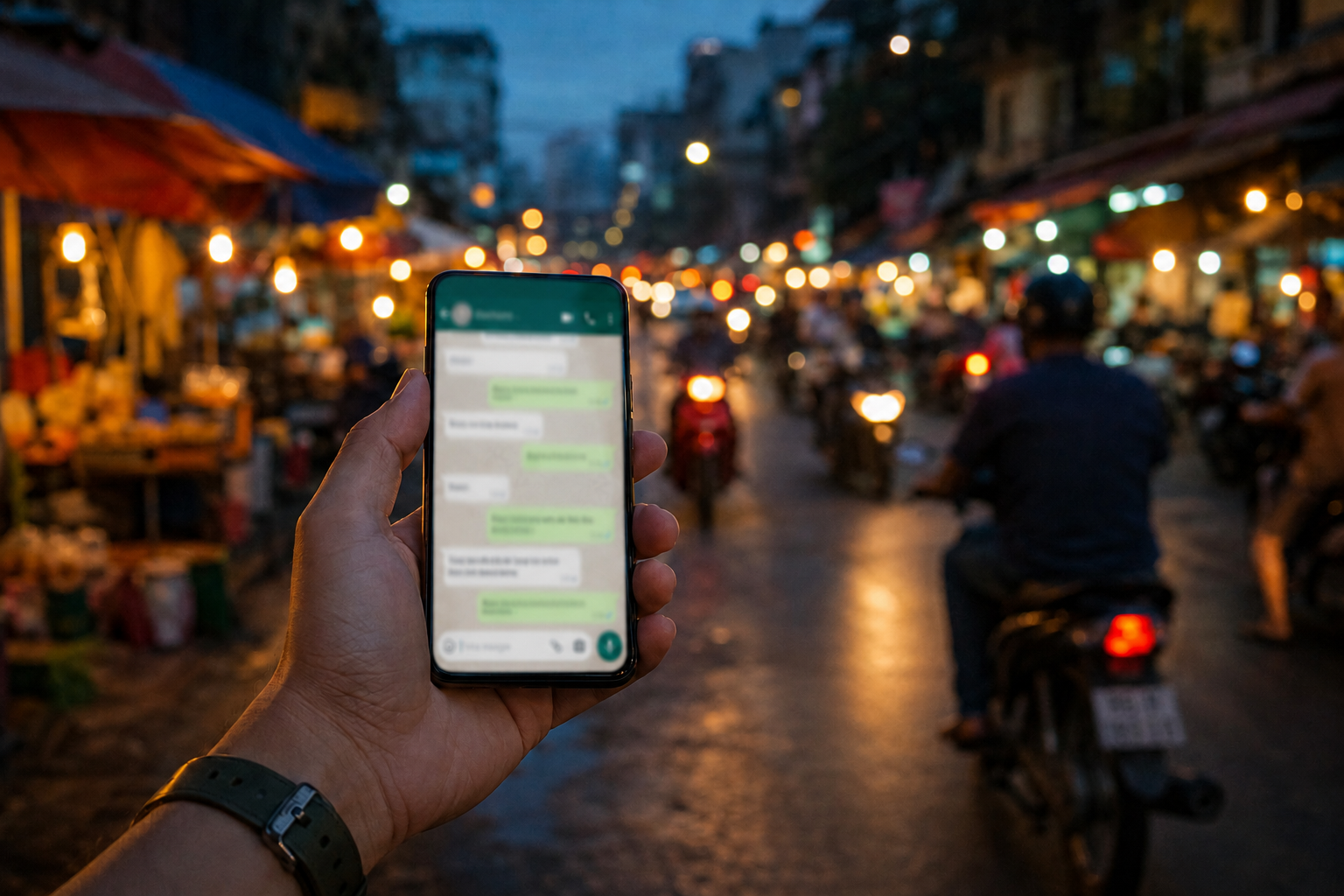
WhatsApp is not a fringe B2B channel in Asia. In several major APAC markets, it is the primary channel through which senior business decisions get coordinated, vendor conversations begin, and informal commercial relationships are maintained. A founder in Jakarta will read your WhatsApp message before they read your email. A senior procurement leader in Mumbai will share a WhatsApp number with your sales rep that they would never share over LinkedIn.
That power makes WhatsApp tempting as a prospecting channel. The temptation is dangerous, because the legal and operational reality of using WhatsApp for cold outreach varies enormously across the region — and getting it wrong has consequences that range from account suspension to genuine legal liability.
Here’s a candid map of where WhatsApp works as a B2B channel, where it doesn’t, and what compliance actually looks like in 2026.
What WhatsApp Actually Allows
WhatsApp itself has become much stricter about commercial use over the last few years. The business platform has two distinct surfaces:
WhatsApp Business app: Designed for small businesses to communicate with their existing customers. Functionally similar to the consumer app, with a few business features (catalogs, automated replies, labels). Not intended for outbound prospecting and not equipped to scale.
WhatsApp Business Platform (formerly the API): The official commercial channel for higher-volume use. Requires going through Meta-approved Business Solution Providers (Twilio, MessageBird, Gupshup, Wati, and others). Has explicit rules around opt-in, message templates, and acceptable use.
The WhatsApp Business Platform’s rules are clear, and they matter:
Opt-in is required before you can message someone. This is not optional. A user must have explicitly agreed, through a documented opt-in mechanism, to receive WhatsApp messages from your business.
The first message in any conversation must use a pre-approved template. Free-form messaging is only allowed inside a 24-hour conversation window after the user has replied to you.
Spam reports are weighted heavily. A high spam report rate gets your number’s “quality rating” reduced, and persistent issues get the number banned from the platform.
In other words: cold outbound on WhatsApp Business Platform is technically not allowed by the platform itself. The platform was built for two-way, opted-in conversations with existing customers, not for prospecting strangers.
What People Actually Do
Despite the platform rules, WhatsApp cold outreach is widespread in parts of Asia. The reality is that many senior buyers expect it, will respond to it, and find it more convenient than email.
The way most teams operate this in practice involves working around the platform rules rather than through them:
Using personal WhatsApp accounts (not the Business Platform) to send messages, accepting the lower scale and higher per-account risk.
Treating contact discovery as the first step: getting the prospect’s mobile number through other means and reaching out from a personal account.
Operating at volumes low enough that spam reports don’t trigger Meta’s automated detection.
This works, but it’s not without cost. Personal WhatsApp accounts can be banned for unsolicited commercial messaging if reported by recipients. The risk is real and the recovery is slow.
The Country-by-Country Reality
The legal layer is where this gets genuinely complicated. WhatsApp’s platform rules are one thing; each country’s privacy and anti-spam laws are another.
India: WhatsApp is the dominant business channel. Cold WhatsApp outreach to senior business contacts is socially common and culturally accepted. The Digital Personal Data Protection Act (DPDP, fully enforced from 2024) introduces consent requirements that, on a strict reading, complicate cold outreach — but enforcement against B2B outbound has been minimal so far. Operating with care is the prevailing practice.
Indonesia: Similar pattern. WhatsApp is critical, cold outreach is common, and the regulatory regime (UU PDP, the Personal Data Protection Law fully effective from 2024) is similar to GDPR in spirit but enforcement against B2B prospecting remains light. The cultural norm is that senior business contacts will accept a well-written WhatsApp introduction; they will block and report a poorly written one.
Vietnam, Thailand, Philippines: WhatsApp coexists with regional alternatives (Zalo in Vietnam, LINE in Thailand) and is used for B2B at meaningful rates. Cold outreach is generally acceptable when targeted and well-personalized. Privacy law enforcement against B2B prospecting has been minimal.
Singapore: This is where it gets careful. The Personal Data Protection Act (PDPA) is enforced rigorously by the PDPC. Sending unsolicited commercial WhatsApp messages without consent can attract regulatory action. The Do Not Call Registry, while focused on phone numbers, is taken seriously and applies to messaging channels in practice. Singapore is a market where WhatsApp prospecting should be reserved for warm or referral-based introductions, not cold lists.
Malaysia: Similar to Singapore in principle, less rigorous in enforcement. The PDPA exists; the practical risk of cold WhatsApp outreach is lower than Singapore but higher than Indonesia.
Hong Kong: The Personal Data (Privacy) Ordinance applies, and the Privacy Commissioner has been active on B2B data issues. Cold WhatsApp outreach is a higher-risk activity than email. Cultural norms also favor more formal channels for initial introductions.
Japan: WhatsApp has marginal market share. LINE dominates personal messaging; even there, B2B cold outreach is culturally inappropriate. The APPI (Act on the Protection of Personal Information) is rigorous. Cold WhatsApp prospecting is essentially a non-starter in Japan.
Korea: KakaoTalk dominates. WhatsApp has limited market share. PIPA (Personal Information Protection Act) is among Asia’s most stringent. Cold cross-channel outreach is high-risk. Korea is an email-and-LinkedIn market for cold; messaging is for established relationships.
China: WhatsApp is essentially unavailable inside mainland China. WeChat is the equivalent and operates under entirely different rules. PIPL (Personal Information Protection Law) is strict. Cold WeChat outreach to B2B contacts is both technically difficult and legally exposed.
Australia: WhatsApp adoption is high among individuals but not the dominant business channel. The Spam Act 2003 explicitly applies to commercial electronic messages, including over messaging platforms, and requires consent. The Australian Privacy Principles also apply. Cold WhatsApp prospecting is a higher-risk activity than email and not the standard practice.
The Practical Operating Rules
If you’re considering WhatsApp as part of your outbound mix in APAC, the operating rules that distinguish a sustainable program from a risky one are:
Map the legal regime per market before you start. Don’t apply a single regional policy. The variation is too large.
Use WhatsApp warmly, not cold. WhatsApp is exceptional for follow-up, for warm introductions, and for managing existing conversations. Using it as the first cold touch is where most of the legal and operational risk concentrates.
Get the email reply first. A common pattern that works well: cold outreach via email and LinkedIn, with a soft mention that further conversation can happen on WhatsApp at the prospect’s preference. Once the prospect has signaled interest, WhatsApp becomes the conversational channel.
Keep volumes low and quality high. A senior salesperson sending 5–10 carefully-crafted WhatsApp messages per day to genuinely-relevant prospects is operating in safer territory than a team sending 200 templated messages per day, regardless of legal regime.
Document opt-in where possible. Even where the regulatory enforcement is light, having an audit trail of how each contact’s number was obtained and what consent (if any) exists protects you in any future review.
Avoid bulk WhatsApp tools that promise scale. The tools that send hundreds of WhatsApp messages per day at low cost almost universally rely on banned methods that get accounts terminated and, in some jurisdictions, expose users to legal liability.
The Strategic Question
The deeper question is not “how do we use WhatsApp legally” but “where does WhatsApp fit in our overall outbound strategy.”
In Indonesia and India, WhatsApp can credibly be a primary channel for warm and follow-up outreach, with email or LinkedIn handling the cold first touch. In Singapore, Hong Kong, and Australia, WhatsApp should generally be reserved for warm relationships only. In Japan, Korea, and China, WhatsApp is largely irrelevant and your channel mix should reflect that.
Treating APAC as a single market and applying one WhatsApp strategy across it is the most common error we see. The cultural, regulatory, and platform-adoption variation is too large for any single playbook.
The Bottom Line
WhatsApp is genuinely powerful in B2B outreach in parts of APAC. It is also a channel where the platform rules, the legal regime, and the cultural norms all matter — and where they vary enough across markets that careful design is the difference between a productive channel and a liability.
The teams that operate WhatsApp well are deliberate about it. They understand which markets it works in, when in the funnel it adds value, and where the legal lines are. They don’t treat it as a volume play, because at volume the model doesn’t survive contact with reality.
If your current strategy involves bulk WhatsApp tooling at scale across APAC markets, the question isn’t whether you’ll have a problem — it’s when, where, and how big.
At Generative Leads, our APAC outreach strategies are designed market-by-market, with channel selection and compliance posture built into the playbook for each country. If you’re trying to figure out how WhatsApp fits into your APAC motion — or whether it should — we’d be glad to share what we’ve learned.